

close
Choose Your Site
Global
Social Media
Author: Site Editor Publish Time: 2026-10-24 Origin: Site


Raw power means absolutely nothing without true electrical efficiency. Venue owners and system integrators face a relentless daily battle. They must balance pristine acoustic quality with brutal heat management. Older traditional setups simply run too hot. They often turn cramped control rooms into literal saunas and trigger catastrophic thermal shutdowns mid-performance. To navigate this operational hazard, you must understand the critical differences in modern amplification topologies. We will break down the engineering, practical applications, and long-term value of these two leading architectures.
Key Takeaways
Technology Core: Both amplifier classes utilize a Class AB output stage to maintain premium sound quality. However, they differ significantly in how they manage voltage to increase electrical efficiency.
Stepped Voltage Systems: These traditional units utilize multiple voltage rails. They are highly reliable, structurally robust, and cost-effective. This makes them an excellent choice for fixed commercial installations like nightclubs and theaters.
Tracking Power Systems: Featuring an advanced tracking power supply, these modern amplifiers offer extreme efficiency and massive power output within a remarkably lighter physical footprint. They are considered the industry standard for touring and large-scale live events.
The Ultimate Choice: The decision between the two topologies depends heavily on your specific venue type, mobility requirements, and long-term operating budget.
To grasp the current landscape of commercial audio, we must look back at the limitations of early amplification technology. Basic amplifier classes were engineered with a primary focus on signal integrity rather than power conservation. Class A amplifiers conduct current continuously. This results in exceptional audio fidelity but generates an enormous amount of wasted thermal energy. Class AB was introduced as a clever compromise. It significantly reduced heat while maintaining high sonic standards.
However, in high-demand commercial environments, even standard Class AB falls short. Think of sprawling stadiums, massive underground nightclubs, and outdoor festivals. When system integrators stack dozens of heavy units in a single equipment rack, the cumulative thermal output and AC power draw create massive logistical nightmares. Excessive heat requires aggressive and expensive cooling systems to prevent equipment failure. This operational bottleneck drove the audio engineering industry to develop advanced topologies. Finding the right professional power amplifier category is crucial for venue operators to avoid blown budgets and system downtime. Consequently, the necessity for high output, low thermal footprint, and pristine audio paved the way for modern highly efficient architectures.
A Class H amplifier represents a pragmatic leap forward in power supply management. It builds directly upon the trusted foundation of the traditional Class AB design but introduces a highly dynamic approach to voltage regulation.
The core engineering concept behind this topology is known as rail switching. In a standard Class AB unit, the power supply provides a constant maximum voltage rail regardless of how loud the audio signal is at any given microsecond. During quiet passages of music or spoken word, the excess voltage is literally burned off as heat.
This inefficiency is solved by utilizing multiple stepped voltage rails. The amplifier seamlessly switches to higher voltage rails only when the audio signal peaks require the extra headroom. During quieter moments, the circuitry drops back down to a lower voltage rail. By constantly adjusting the available voltage to match the immediate needs of the audio track, this unit drastically reduces wasted energy. For integrators looking for a robust workhorse, modern four-channel transformer power supply models provide exceptional stability. They utilize massive copper toroidal transformers to ensure rock-solid performance and two-ohm stability for long-running commercial venues.
Pros: Because the actual audio amplification is still handled by a Class AB output stage, this design delivers excellent fidelity with virtually no high-frequency switching noise. Furthermore, the internal circuitry is relatively straightforward compared to advanced digital models. This translates to high long-term reliability and a more accessible upfront cost.
Cons: The primary drawback is physical weight. To manage the stepped voltage rails, these amplifiers typically rely on large and heavy copper transformers. In addition, while highly efficient at lower volumes, they are slightly less efficient than tracking designs when pushed to their maximum continuous output.
The Class TD amplifier is a proprietary hybrid topology. It was originally developed to merge the sonic purity of analog amplification with the extreme efficiency of modern digital power supplies.
Unlike stepped voltage rails, this architecture utilizes an infinitely variable tracking system. The amplifier features a highly efficient digital power supply that rapidly tracks the incoming audio signal. This advanced power supply continuously modulates the voltage. It keeps the voltage just a fraction of a volt above what is required by the audio signal at any exact millisecond.
This precisely tailored voltage is then fed into a pristine Class AB output stage. Because the output transistors never have to deal with excess voltage drop, they generate almost zero wasted heat. Specifically, the tracking section handles the heavy lifting of power conversion, while the analog section handles the delicate task of shaping the audio wave. High-performance four-channel models can drive massive line arrays while occupying minimal rack space.
Pros: This design offers audiophile-grade sound quality combined with extreme efficiency, often reaching electrical conversion rates of up to ninety percent. Because they utilize Switch Mode Power Supplies instead of heavy copper transformers, they are incredibly lightweight. When extreme power density is non-negotiable, this becomes the ultimate solution for touring professionals.
Cons: The circuitry required to track an audio signal at such lightning-fast speeds is incredibly complex. This sophisticated engineering requires premium internal components. Naturally, this results in a higher upfront procurement cost for the buyer.
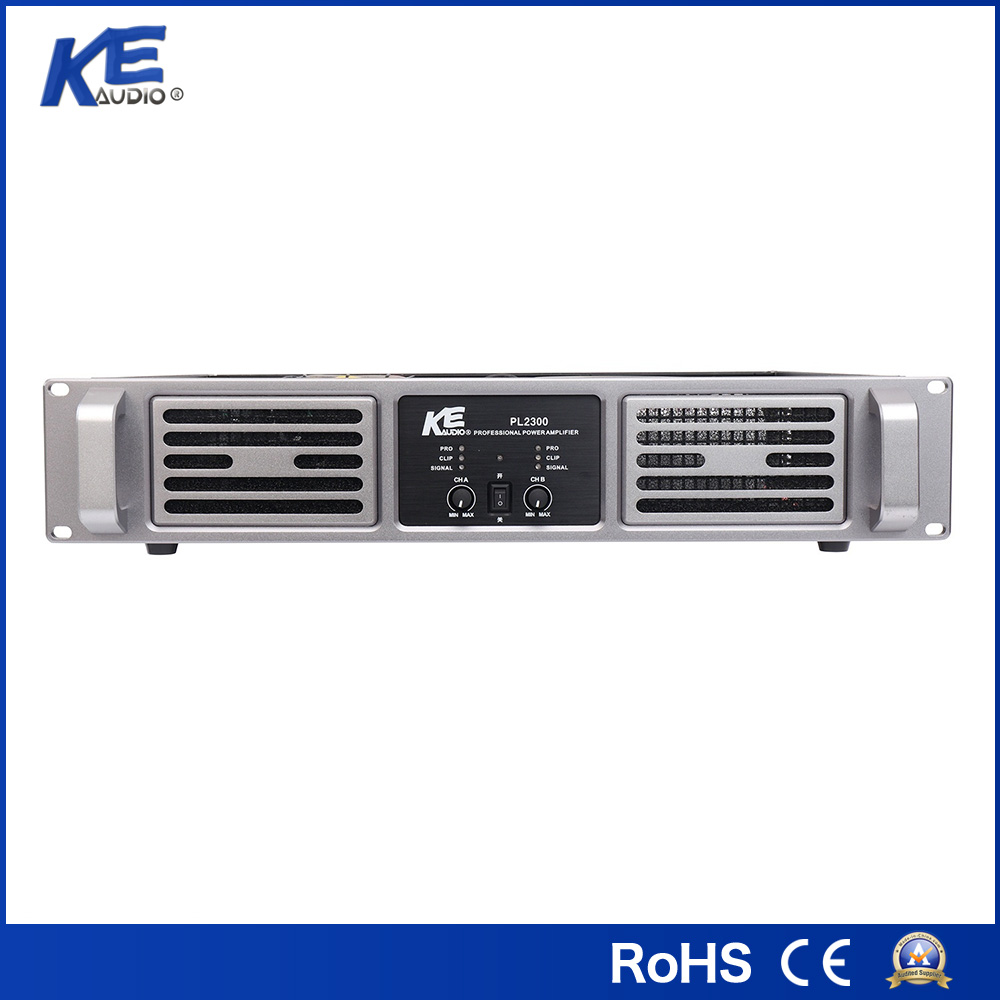
When evaluating these two technologies for a commercial build, system integrators must look far beyond basic peak wattage ratings. The decision fundamentally impacts rack weight, thermal management, operational overhead, and long-term reliability. Below is an objective metric-driven comparison across the dimensions that matter most.
Sound Quality and Audio Fidelity: From a purely sonic perspective, both topologies share a massive advantage. They utilize a Class AB output stage. This means the final signal delivered to the loudspeakers bypasses the harsh high-frequency switching distortion that plagued early pure digital designs. However, nuanced differences emerge when pushing these units to their absolute limits. Stepped rail designs can theoretically produce microscopic switching artifacts during sudden transients like a heavy kick drum. In contrast, a continuously tracking power supply dynamically hugs the audio signal. This results in exceptional dynamic headroom and a slightly smoother response during extreme clipping scenarios.
Efficiency and Heat Dissipation: Thermal management is a critical safety factor in commercial racks. A standard analog amplifier operates at roughly fifty percent efficiency. Stepped rail designs significantly improve upon this, typically achieving up to seventy-five percent efficiency. Yet, at sustained maximum output, they will still generate considerable heat requiring robust internal heat sinks and high-velocity cooling fans. The tracking topology dominates this category by consistently delivering up to ninety percent efficiency. Very little energy is wasted as heat. This drastic reduction in thermal footprint means venues can significantly reduce their air conditioning expenditure.
Size, Weight, and Form Factor: The physical logistics of commercial audio equipment directly impact labor and transportation costs. Traditional designs rely on large toroidal copper transformers. A high-output commercial unit can easily weigh over thirty kilograms. Conversely, tracking architectures are almost always paired with a Switch Mode Power Supply. Operating at high frequencies allows the use of vastly smaller magnetic components. Consequently, a unit delivering identical wattage can weigh as little as twelve kilograms. In a touring scenario, this weight reduction saves hundreds of kilograms per rack.
Budget and Total Cost of Ownership: Upfront capital expenditure and long-term operational expenditure must be balanced. Traditional circuitry is more mature and less complex to manufacture, making the initial purchase price generally lower. Advanced tracking designs require premium components, resulting in a higher upfront cost. However, the Total Cost of Ownership over a decade often favors the highly efficient models. The savings accumulated from reduced electricity consumption, lower cooling requirements, and decreased transportation fuel frequently offset the initial premium.
| Feature or Metric | Stepped Rail Architecture | Tracking Power Architecture |
|---|---|---|
| Output Stage | Class AB | Class AB |
| Power Supply Type | Toroidal Transformer | Switch Mode Power Supply |
| Efficiency Rating | 65% to 75% | 80% to 90% |
| Thermal Output | Moderate to High | Very Low |
| Weight Profile | Heavy | Lightweight |
| Upfront Cost | Budget-Friendly | Premium Investment |
Technical specifications only matter when applied to the real world. Identifying your specific operational environment will dictate which amplifier topology yields the best return on investment.
Best Scenarios for Stepped Rail Designs: This is the undisputed champion of the set-and-forget commercial installation. Because they utilize robust copper transformers, they are highly resilient to voltage fluctuations.
Nightclubs and Karaoke Venues: These venues require sustained heavy bass output for hours consecutively. The massive transformers handle sustained low-frequency loads exceptionally well without voltage sag.
Houses of Worship and Theaters: In permanent installations where the equipment rack is stationary, physical weight is entirely irrelevant.
Budget-Conscious Integrations: If a venue is undergoing a massive multi-room audio build, the lower per-unit cost allows integrators to allocate more budget toward premium loudspeakers.
Best Scenarios for Tracking Designs: When mobility, extreme power density, and strict thermal limits are introduced, this becomes the mandatory standard.
Touring Sound Systems and Live Festivals: On sweaty festival stages and in the touring industry, truck space and weight limits directly equate to financial cost. The lightweight design allows production companies to pack massive power into a single fly-rack.
Stadiums and High-Density Racks: Stadiums often require dozens of amplifiers networked in a single confined control room. Superior efficiency prevents these high-density racks from overheating.
Mobile Event Operators: For independent engineers who must physically lift and transport their own gear daily, the ergonomic benefit of a lightweight chassis cannot be overstated.
Before finalizing a procurement order, commercial buyers must evaluate several technical parameters. This ensures system compatibility and longevity.
Power Output versus Speaker Load: Matching your continuous power to your loudspeaker rating is critical. A standard rule is to select a unit capable of delivering roughly double the continuous power rating of the speaker. Furthermore, verify impedance stability. If you plan to daisy-chain subwoofers, ensure the unit is stable at two ohms.
Channel Requirements: The modern commercial standard is rapidly shifting away from traditional two-channel stereo units. High-density four-channel configurations allow system engineers to power complex line arrays and multiple subwoofer clusters from a single chassis.
Rack Space and Ventilation: Calculate your available vertical rack space. Even with ultra-efficient models, proper ventilation spacing is recommended. Leaving one blank unit of space between heavy-duty amps ensures optimal airflow and prolongs the lifespan of internal capacitors.
Recent industry analysis and market shifts indicate a growing global demand for eco-conscious and high-efficiency venue designs. As electricity costs soar globally, venue operators are heavily scrutinizing the long-term operational expenditure of their audio racks. The debate between these two architectures is increasingly leaning toward thermal management and energy compliance as primary purchasing drivers.
While pure digital technology continues to capture the entry-level consumer market due to its low cost, professional sound engineers consistently report a different reality for large venues. Hybrid topologies remain irreplaceable for high sound pressure level environments. The warmth and transient response of an analog output stage, combined with smart digital power tracking, perfectly bridges the gap between acoustic purity and modern energy standards. Looking ahead, future iterations will likely focus on deeper digital signal processing integration. This will allow network protocols to communicate directly with the power supply for predictive voltage tracking, further pushing the boundaries of electrical efficiency.
The core debate ultimately focuses on your specific operational requirements. Whether you need the proven, cost-effective reliability of a massive transformer for a permanent nightclub, or the lightweight, uncompromising efficiency of a tracking system for a touring rig, making the right choice is crucial. Evaluate your continuous power requirements, thermal limitations, and mobility needs carefully. Ready to upgrade your venue with professional-grade audio power? Explore the full range of high-performance solutions at KE Audio to find the exact amplifier engineered for your specific acoustic environment.
Yes, in most critical listening scenarios, it generally does. Because a tracking amplifier utilizes a traditional analog output stage, it inherently avoids the high-frequency switching distortion and phase shift issues that can sometimes plague pure digital amplifiers. This hybrid approach delivers the warmer and more natural sonic characteristics favored by audio professionals, while still maintaining incredible levels of electrical efficiency.
Absolutely. These amplifiers, particularly those built with massive toroidal copper transformer power supplies, are highly regarded for their low-frequency performance. These heavy transformers provide immense current reserves, allowing the amplifier to deliver robust and sustained bass response. This makes them a staple in commercial nightclubs and electronic dance music venues where heavy and continuous subwoofer loads are mandatory.
The primary weight difference lies in the power supply architecture. Traditional designs typically require heavy toroidal transformers to step the AC voltage and manage multiple voltage rails. In contrast, modern tracking amplifiers almost exclusively utilize Switch Mode Power Supplies. This technology operates at very high frequencies, which allows the internal magnetic components to be vastly smaller and lighter, drastically reducing the overall chassis weight.
The tracking architecture is definitively more energy-efficient. By utilizing a power supply that continuously adjusts the voltage rail to sit just above the audio signal, it minimizes wasted energy. These units typically operate at up to ninety percent efficiency. They draw less overall power from the grid and convert far less energy into wasted heat compared to stepped rail units, which usually peak around seventy-five percent efficiency.
When properly maintained in a climate-controlled rack room, both architectures can easily last over a decade. Traditional transformer-based models often have a slight edge in sheer longevity due to simpler internal circuitry that is less sensitive to dust and minor voltage spikes. However, modern tracking models are built with advanced protective relays and thermal limits that ensure long-term reliability provided their cooling fans are kept clean.
Yes, they are exceptionally well-suited for high-frequency drivers. Because the final amplification stage is pure Class AB, the output avoids the harsh digital artifacts associated with lower-tier designs. This ensures that the delicate high frequencies reproduced by line array tweeters remain crystal clear, making this topology a favorite for touring engineers managing complex vocal performances.


