

close
Choose Your Site
Global
Social Media
Author: Site Editor Publish Time: 2026-10-27 Origin: Site


Poor meeting audio remains one of the most persistent frustrations in the era of hybrid work. When remote participants encounter sudden acoustic feedback, muffled voices, or endless echoes, productivity immediately halts. Recent industry analyses indicate a massive shift in corporate IT spending. Businesses are rapidly moving away from piecemeal audio setups. Instead, they are investing heavily in unified, professional AV ecosystems. The driving force behind this trend is meeting equity. Remote participants must hear every word just as clearly as those sitting in the physical room. Consequently, over 60% of IT helpdesk tickets are now directly related to poor audio clarity, forcing organizations to rethink their acoustic infrastructure.
Many organizations attempt to solve these acoustic issues by purchasing expensive ceiling microphones or flashy soundbars. They frequently neglect the essential component that acts as both the brain and the muscle of the entire audiovisual system. That component is the amplifier. Without the proper power source, even the most premium speakers will sound distorted or weak. The secret to pristine audio does not simply mean buying the most expensive gear on the market. It requires a calculated, engineering-based approach. You must match the specific power output, channel configuration, and processing capabilities of your hardware to the exact physical dimensions and acoustic profile of your room.
Key Takeaways
Size Dictates Power: A compact 10-person huddle room requires a vastly different wattage and channel setup compared to a 100-seat corporate auditorium.
Clarity Over Volume: A dedicated commercial amplifier prioritizes vocal frequency clarity and echo cancellation over heavy bass reproduction.
Scale with the Right Tech: Large corporate spaces often require a high-impedance 70V/100V system to distribute sound evenly across long distances without signal degradation.
Features Matter: Built-in Digital Signal Processing, feedback suppression, and multi-zone routing are essential capabilities when upgrading modern AV racks.
Before investing in new hardware, IT managers and AV integrators must understand the foundational purpose of amplification within a commercial audio chain. The power unit serves as the critical bridge between your digital meeting platform and the physical environment.
At its core, this device receives a low-voltage audio signal from a source. This source could be a microphone array, an audio mixer, or an enterprise video conferencing codec. This initial signal is far too weak to physically move the magnetic cones inside your loudspeakers. The amplifier increases the voltage and current of this signal. It provides the necessary electrical power to drive the room's speakers at audible, crisp volumes. Without this specific AV component, your digital audio remains trapped as a silent electrical pulse.
A common procurement mistake in small business setups is repurposing consumer-grade home theater receivers for meeting rooms. This approach introduces significant reliability and performance issues. Home receivers are engineered for dynamic movie soundtracks. They emphasize deep bass and dramatic surround sound effects. In contrast, a commercial conference audio amplifier is specifically tuned for the human vocal frequency range. This range typically falls between 300 Hz and 3.4 kHz. Furthermore, commercial units feature robust thermal cooling mechanisms. They are designed to run continuously for 8 to 12 hours a day without overheating. They also feature specific connection terminals engineered for commercial ceiling speakers.
Selecting the right equipment is an engineering decision rooted in mathematics and acoustic science. Guessing wattage based on a product's price tag is a dangerous game. It often leads to either blown speakers or inadequate volume during critical presentations.
When evaluating specifications, buyers often equate higher wattage strictly with louder volume. Specifically in commercial audio, higher wattage actually translates to headroom. Headroom is the critical buffer zone between the average operating volume and the maximum capability of the hardware. Having adequate headroom ensures that when a speaker suddenly raises their voice, the amplifier can handle the electrical spike. It prevents the audio from clipping or distorting. From an engineering standpoint, you want a system that delivers a comfortable Sound Pressure Level while operating at only 50% to 60% of its maximum capacity.
Square footage is only the first variable in the equation. The physical materials in your meeting space drastically alter power requirements. Imagine walking into a modern boardroom featuring floor-to-ceiling glass walls, a polished mahogany table, and an exposed concrete ceiling. These hard surfaces create a highly reflective acoustic environment. Ambient noise from HVAC systems or nearby street traffic also raises the room's noise floor. Consequently, you need an amplifier with sufficient power to cut through this background noise. This power must be coupled with advanced equalization controls to subtly tone down frequencies that bounce erratically off glass surfaces.
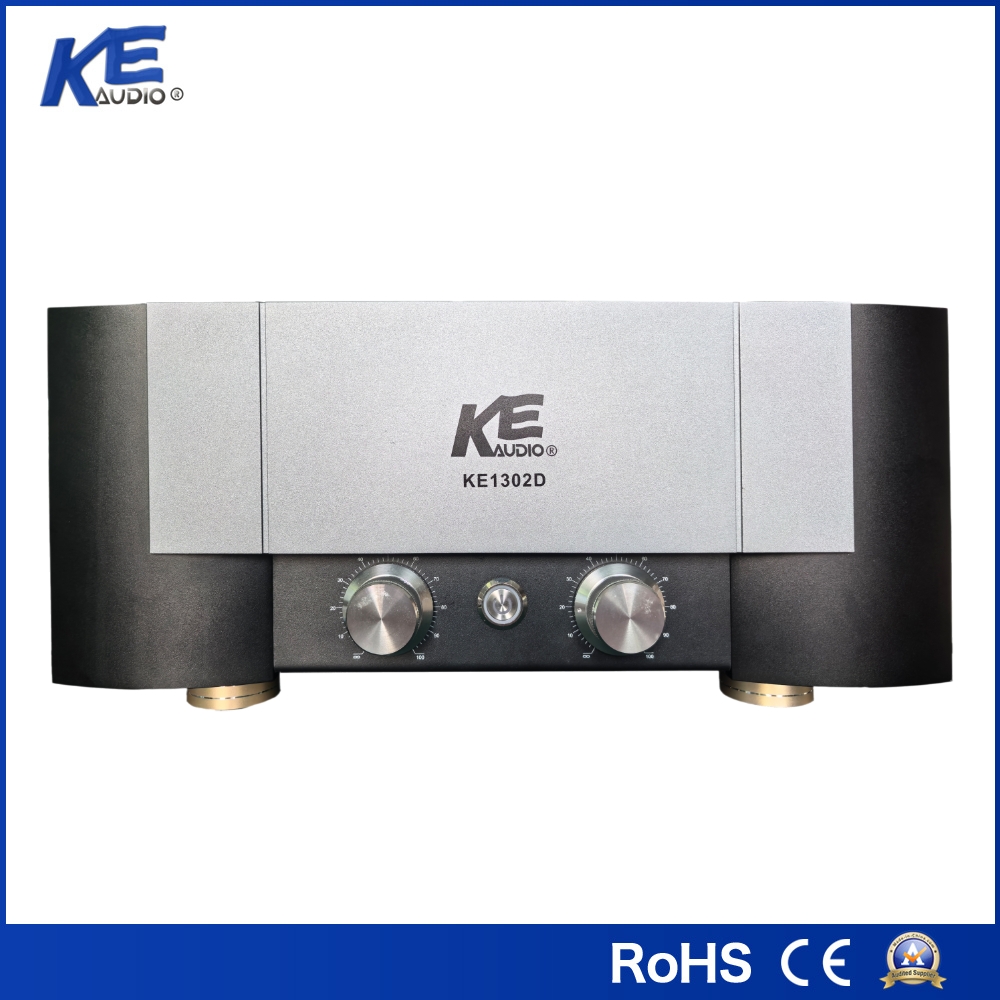
For intimate spaces like huddle rooms and standard meeting rooms designed for 2 to 15 people, efficiency and physical footprint are the primary purchasing drivers. The audio strategy here focuses on compact design and seamless integration with your chosen unified communications platforms.
A standard 15-person conference room does not require massive power output. Typically, 30W to 120W per channel is more than sufficient to drive two to four low-impedance 8-ohm ceiling speakers. Overpowering a small room is an unnecessary expenditure. It simply generates excess heat in your AV credenza. The focus here should be on Class-D amplifiers. This specific topology is highly efficient. It generates very little heat and features a compact form factor. These units can easily be mounted under the conference table or discreetly behind a wall-mounted display.
For smaller rooms, IT teams often debate between an integrated all-in-one unit and a dedicated standalone amplifier. If the room relies heavily on bring-your-own-device setups where users connect laptops via USB, an integrated amplifier with diverse input connectivity is highly practical. Conversely, if the room utilizes a dedicated room PC and an external digital signal processing matrix, a simple power amplifier is the most reliable choice. This stripped-down approach significantly reduces potential points of failure.
When a room scales up to accommodate 15 to 40 people, such as long executive boardrooms or U-shaped training setups, audio dynamics change completely. The inverse square law of sound dictates that audio levels drop significantly over distance.
In a long executive boardroom, placing two speakers at the front of the room near the display is a flawed strategy. To ensure the people at the back hear clearly, the volume must be painfully loud for those sitting at the front. The solution is distributed audio using a ceiling speaker array. By spacing multiple speakers evenly across the ceiling, you can operate the amplifier at a lower volume. This ensures every participant experiences the exact same audio clarity, regardless of their seating position.
Current industry trends highlight a growing reliance on intelligent, software-driven solutions. Corporate enterprises now demand flawless communication for multi-participant virtual calls. In large rooms with multiple open microphones, Digital Signal Processing is non-negotiable. Advanced amplifiers feature onboard processing to manage Acoustic Echo Cancellation. When remote participants speak, their voices come through the room's speakers. Without cancellation technology, the room's microphones will pick up that audio and transmit it back to the remote users. This creates a highly distracting echo. The processor intelligently filters out the loudspeaker audio from the microphone feed in real-time.
Large spaces rarely operate on a simple left-and-right stereo mix. They require a 4-channel or 8-channel amplifier to create distinct audio zones. For example, you may want the speakers directly above the active presenter to be slightly attenuated to prevent microphone feedback. Meanwhile, the speakers at the far end of the table can be boosted. This multi-channel flexibility allows AV integrators to tune specific zones independently. It guarantees a professionally balanced executive space.
Corporate town halls, massive training centers, and university-style lecture halls require a completely different architectural approach to audio amplification. Standard low-impedance audio principles simply no longer apply at this massive scale.
Standard low-impedance 8-ohm amplifiers are excellent for small rooms. However, they fail entirely when you need to connect dozens of speakers. Wiring 20 speakers to an 8-ohm amplifier will drop the electrical resistance to dangerous levels, eventually destroying the equipment. For auditoriums, you must transition to a constant-voltage system. In this setup, the amplifier steps up the voltage of the audio signal. This allows AV integrators to daisy-chain dozens of ceiling or wall-mounted speakers over hundreds of feet of speaker wire. You can achieve this without experiencing signal loss or damaging the hardware.
Massive spaces require heavy-duty performance. Imagine a critical quarterly review in a 200-seat hall where the executive's voice is drowned out by ambient crowd noise. You need equipment capable of pushing clear, articulate sound to the very back row without distorting the audio for the front row. High-wattage units are engineered to handle the immense electrical load of a fully populated 100V speaker line. When outfitting these large-scale environments, selecting a robust public address amplifier ensures that your system maintains absolute vocal clarity. It provides the massive headroom required for high-impact presentations.
To simplify the procurement process, refer to this engineering baseline when matching amplifier specifications to your commercial environment.
| Room Type | Recommended Power | System Architecture | Essential Features |
|---|---|---|---|
| Huddle Room up to 15 pax | 30W to 120W per channel | Low-Impedance 8-ohm | Class-D efficiency, compact footprint |
| Executive Boardroom | 120W to 250W per channel | Multi-Channel 4 to 8 Zones | Built-in DSP, Echo Cancellation |
| Corporate Auditorium | 500W to 1000W+ total | Constant Voltage 70V/100V | Massive headroom, thermal protection |
Evaluating specification sheets can be overwhelming for IT and procurement teams. To ensure long-term viability and ease of use, look for these critical features when selecting an amplifier for commercial spaces.
In rooms where presenters walk around with wireless lavalier microphones, acoustic feedback is a constant threat. Modern hardware utilizes intelligent algorithms. These algorithms instantly detect and notch out the specific frequencies causing that high-pitched squeal before human ears can even perceive it.
The AV industry has aggressively moved away from thick analog copper cables. Modern corporate infrastructure relies heavily on Audio over IP. Amplifiers equipped with network audio protocols allow you to route high-fidelity audio across your existing corporate IT network using standard CAT6 ethernet cables. This drastically reduces cabling costs and simplifies the physical installation.
Corporate sustainability mandates and rising energy costs are serious considerations for facilities managers. Look for amplifiers that feature intelligent auto-standby modes. These units automatically power down into a low-energy sleep state when no audio signal is detected for a set period. They instantly wake up the moment a meeting begins. As a result, this reduces heat buildup in AV racks and lowers overall electricity consumption.
Your amplifier should never require a manual volume knob adjustment by the end-user. It must integrate seamlessly with industry-standard centralized control systems. Standardized control ports allow the amplifier to be managed directly via the room's central touch panel. This engineering approach ensures a frictionless, automated user experience.
Even the highest-quality hardware will underperform if the system architecture is flawed. Avoiding these frequent integration errors is critical for achieving pristine audio and protecting your corporate investment.
Attempting to save budget by purchasing a low-wattage amplifier for a large room is a primary cause of poor audio. When a low-wattage amp is pushed to its absolute limits to fill a large room, the electrical waveform clips. It turns smooth sound waves into jagged square waves. This not only makes voices sound harsh and robotic. It can permanently physically damage the tweeters inside your ceiling speakers.
Connecting standard low-impedance residential speakers to a high-impedance commercial amplifier terminal is a recipe for immediate hardware failure. Impedance must always be correctly matched. Failing to properly calculate the tap settings on your distributed 100V speaker line will result in blown fuses, triggered protection circuits, or total equipment destruction.
An amplifier can only boost the signal it receives. It cannot fix poor acoustics at the physical source. A common mistake is placing ceiling microphones directly adjacent to ceiling speakers. Even with advanced digital processing, the physical proximity will cause the microphone to pick up the speaker audio louder than the human voices in the room. Proper spatial separation is mandatory before amplification can do its job effectively.
Clear audio relies heavily on the hard science of matching room volume to amplifier power. A properly configured system prevents listener fatigue, eliminates distracting echoes, and ensures that every voice is heard with natural clarity. Whether you are outfitting a compact huddle room or a massive 150-person lecture hall, selecting the correct power unit is the absolute foundation of effective corporate communication. We highly recommend that IT teams and business owners carefully evaluate their room dimensions and acoustic challenges before upgrading their infrastructure. To find the perfect match for your specific meeting space, explore the full range of commercial audio solutions tailored specifically for modern business environments. Equip your spaces with the right technology, and watch your meeting productivity soar.
A basic rule of thumb is 1 to 2 watts per square foot for spaces with standard ceiling heights. However, speaker sensitivity and room acoustics play a major role. A highly reverberant room with glass walls may require significantly more headroom. This extra power maintains vocal clarity without pushing the system into distortion.
Yes, this is highly recommended for large boardrooms, auditoriums, or training centers. These spaces require 70V/100V ceiling speaker systems to cover long distances evenly. However, for smaller huddle rooms, a dedicated low-impedance conference audio amplifier is usually much more efficient. It provides a better frequency response for intimate conversational audio.
An 8-ohm low-impedance setup is designed for short cable runs and a small number of speakers, typically two to four. It delivers high-fidelity sound perfect for small rooms. A 70V/100V constant voltage system is designed for massive scale. It allows integrators to daisy-chain dozens of speakers over thousands of feet of wire without losing volume or damaging the amplifier. It is the standard for auditoriums and corporate-wide paging.
Digital Signal Processing acts as the intelligent brain of the audio system. It actively analyzes the audio streams in real-time. It applies Acoustic Echo Cancellation to stop loudspeaker audio from looping back into the microphones. It also provides automatic gain control to balance quiet and loud talkers, and filters out persistent background noises like HVAC hums. This ensures remote participants hear a clean, professional audio feed.
No. Active speakers have built-in amplifiers and only require a line-level audio signal alongside a direct power outlet. However, passive speakers are the industry standard for professional, integrated conference rooms. Passive speakers require a centralized, external amplifier. They are lighter, safer to mount in drop ceilings, and much easier for IT teams to maintain securely from a central AV rack.


