

close
Choose Your Site
Global
Social Media
Author: Site Editor Publish Time: 2026-09-19 Origin: Site


Audio professionals constantly face a bottom-of-funnel dilemma when designing complex sound systems. You must choose between an off-the-shelf standard model and a specialized architecture. This decision ultimately dictates your final acoustic quality. It also impacts how efficiently you can complete an installation.
The primary technical stakes involve tuning flexibility, integration complexity, and overall system stability. Generic equipment often forces you to compromise on precise phase correction. It limits your signal routing options. Dedicated systems demand a higher initial investment but promise seamless software-hardware alignment. They eliminate the frustrating glitches common in pieced-together rigs.
The right choice depends heavily on specific project constraints. We will explore whether your DIY auto installation, commercial network setup, or OEM scaling effort needs a basic processor or a highly engineered solution. You will learn how to evaluate processing architectures for long-term scalability. You will also discover which system best matches your technical expertise.
Standard DSP models offer predictable upfront costs and familiar, generalized interfaces suitable for basic routing and crossover needs.
A self-developed DSP amplifier provides superior hardware-software alignment, reducing latency and unlocking advanced acoustic algorithms.
Evaluating proprietary DSP software against open-source or generic alternatives is critical for determining long-term system scalability and tuning depth.
Partnering directly with a specialized DSP amplifier manufacturer mitigates deployment risks through dedicated firmware support and tailored troubleshooting.
You must understand the foundational differences between standard models and proprietary solutions. This baseline dictates how your audio system will perform under stress. It also determines how easily you can tune a difficult room.
Standard models utilize generic, mass-market chips. Manufacturers pair these chips with third-party or white-label software. This approach keeps production costs low. You benefit from a lower initial hardware cost. The user interface remains standardized across many budget brands. However, this UI often feels rigid. It lacks deep parameter control. These standard models remain acceptable for simple fixed-install environments. They handle basic crossovers and equalization adequately.
In contrast, a self-developed DSP amplifier features in-house engineered hardware topologies. Engineers deeply integrate this hardware with custom code. The primary assumption here is a highly optimized signal flow. You gain a unified ecosystem. These devices are built for precision phase correction. They handle complex channel routing flawlessly. The seamless handshake between the physical board and the digital interface prevents bottlenecks.
Consider the physical footprint and wiring complexity of your setup. Integrating separate generic components requires extensive wiring. Each connection introduces a potential point of failure. It increases the risk of ground loops. An all-in-one unified DSP dramatically reduces this footprint. You save rack space. You also minimize signal degradation across long cable runs.
Architecture Comparison Summary
| Feature | Standard DSP Models | Self-Developed Architecture |
|---|---|---|
| Hardware Origins | Mass-market, generic chips | In-house engineered topologies |
| Software Synergy | Third-party or white-label UI | Deeply integrated proprietary code |
| Wiring Complexity | High (requires external linking) | Low (unified, all-in-one footprint) |
| Primary Use Case | Basic routing, entry-level budgets | Precision tuning, complex acoustics |
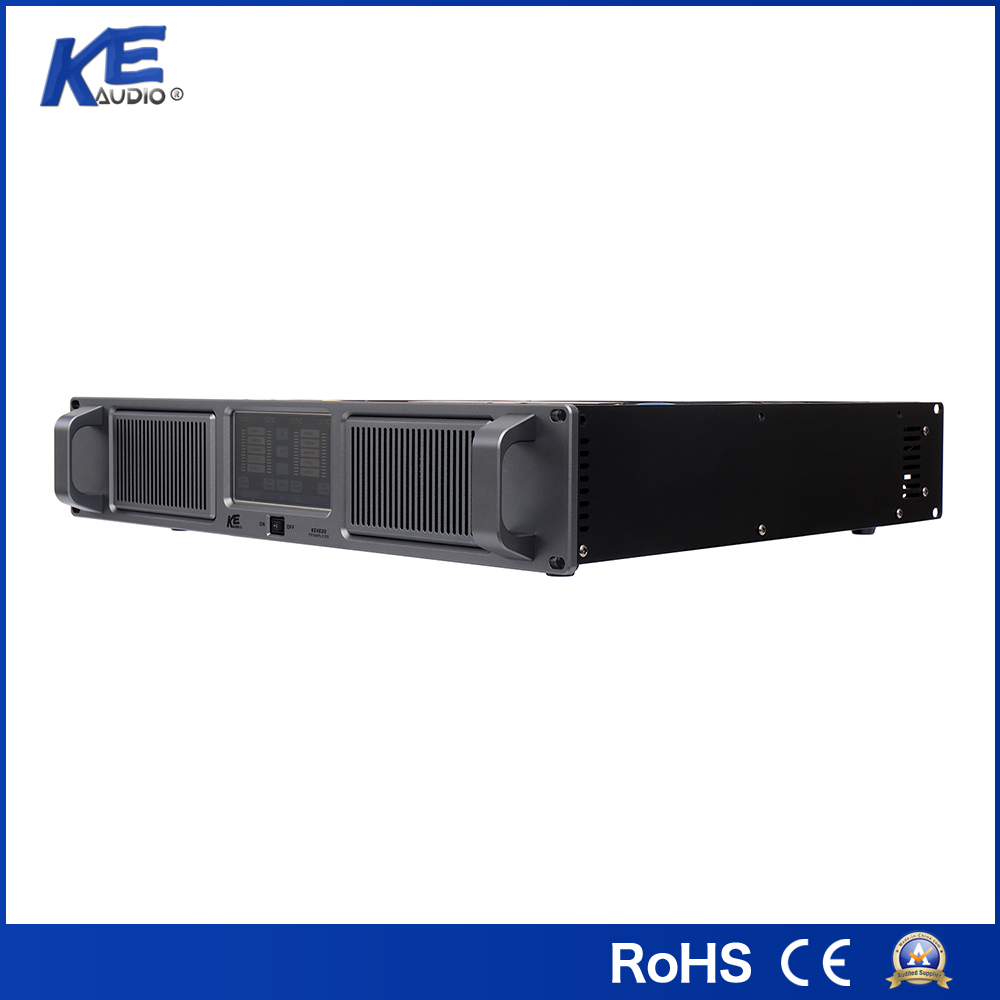
Evaluating an audio infrastructure requires looking beyond basic wattage. You must inspect the algorithms, network capabilities, and physical flexibility. These dimensions separate entry-level gear from professional-grade solutions.
Algorithm precision defines your tuning capability. You must evaluate the exactness of the EQ. Check the available crossover slopes. Linkwitz-Riley and Butterworth filters should offer varying decibel-per-octave options. Time-alignment capabilities must allow sub-millisecond adjustments. Generic interfaces often round these numbers off. They limit your tuning resolution.
Conversely, proprietary DSP software maps directly to specific hardware limits. It unlocks the full processing power of the chip. You can push dynamic EQ adjustments without clipping the signal. Software stability during active, real-time tuning sessions is critical. Generic software sometimes crashes when saving complex presets. Proprietary software prevents this data loss. It ensures smooth transitions during live tuning.
Best Practice: Always test software in offline mode before purchasing. Ensure the interface feels intuitive. Check if the EQ bands respond instantly to your mouse clicks.
Modern audio deployments rarely exist in isolation. You must assess the device’s capability to handle multi-zone routing. Digital audio networking protocols like Dante and AES67 are now industry standards. An intelligent network amplifier routes hundreds of uncompressed audio channels over a single ethernet cable. It eliminates bulky analog snakes.
You must determine if the system architecture supports future firmware upgrades. Some standard models lock you into an obsolete processing standard. A network-ready device allows remote monitoring. It lets you push firmware updates across multiple zones simultaneously. This scalability protects your initial investment.
Your hardware must adapt to unpredictable environments. Examine the input and output versatility carefully. A truly flexible unit accepts high-level inputs, low-level RCA, optical, and coaxial connections. It should seamlessly integrate analog and digital sources.
Evaluate how easily the unit adapts to varying impedance loads. Complex active speaker setups demand stable power delivery. A robust customizable audio amplifier drives 2-ohm and 4-ohm loads without thermal shutdown. It preserves signal integrity during heavy transient peaks.
Not every project requires a highly specialized processor. Standard models serve a distinct and important purpose in the audio industry. They provide accessible solutions for straightforward deployments.
Ideal Scenarios: These models suit projects with strict, low-tier budget ceilings. They work perfectly when you have minimal custom tuning requirements. Use them for applications where basic frequency splitting is your only goal. For example, a simple retail background music system rarely needs advanced phase alignment.
Advantages: You benefit from immediate market availability. Novice technicians appreciate the generic user interface. The familiar layout reduces the training time for new installers. You also gain access to a wide variety of budget brands. This variety makes finding replacement parts easier.
Implementation Risks: You face disjointed hardware and software support. The likelihood of high noise floors increases significantly. Hiss often plagues budget chips. You also have a limited ability to resolve complex acoustic anomalies. Restricted DSP bands prevent surgical EQ cuts.
Common Mistake: Do not deploy a standard model in a highly reflective acoustic space. The limited parametric EQ bands will fail to tame severe room resonances.
When acoustic demands run high, standard models fall short. Specialized processors provide the horsepower necessary for critical listening environments. They represent the pinnacle of audio engineering.
Ideal Scenarios: High-fidelity automotive systems demand these processors. Professional studio monitoring relies on their accuracy. Commercial venues requiring precise acoustic mapping also necessitate this tier of equipment. If the room sounds terrible, you need dedicated algorithms to fix it.
Advantages: The seamless hardware-software handshake guarantees stability. You experience noticeably lower processing latency. This low latency is crucial for live performance monitoring. You also gain access to advanced tone capture or room correction algorithms. These tools automatically measure and compensate for acoustic flaws.
Implementation Risks: You face a steeper learning curve for the proprietary software. Some platforms lock you into a specific vendor ecosystem. The higher initial capital expenditure can strain tight budgets. However, this upfront spend often prevents costly re-installations later.
Working directly with a dedicated DSP amplifier manufacturer changes your deployment experience. It ensures you have access to responsive technical support. B2B integrators can even request custom firmware features. This manufacturer leverage is invaluable when tackling unconventional acoustic spaces.
Procuring the hardware is only the first step. You must understand the practical realities of deploying these systems. Real-world economics go beyond the sticker price. They include labor hours, system failures, and troubleshooting time.
Calculate the labor hours saved by utilizing a unified system. Integrating discrete standard components demands meticulous cable management. Your technicians spend hours terminating wires. They must gain-match multiple separate devices. A unified, self-developed system features streamlined wiring. The amplifier and processor exist in one chassis. This reduces installation time by a massive margin. It allows your crew to move on to the next job faster.
Compare the failure rates of generic multi-part systems versus optimized all-in-one architectures. Every patch cable introduces a potential failure point. Generic systems suffer from mismatched voltage outputs. This mismatch stresses the components over time. Optimized architectures operate in perfect harmony. The internal power supply perfectly matches the amplifier module and DSP chip. This cohesion dramatically reduces field failure rates.
Differentiate the value of continuous firmware updates. A self-developed brand regularly releases patches. They add new EQ features. They improve network stability. This ongoing support keeps your system modern. Conversely, standard models often feature static software. Once the unit ships, the generic software rarely sees an update. When bugs emerge, you are largely left on your own.
Choosing the right hardware requires a methodical approach. Do not rely on marketing brochures alone. Follow a strict decision matrix to ensure the system matches your actual needs.
Decision Matrix Step 1: Audit your tuning requirements. Determine if you only need basic EQ and crossovers. If yes, a standard model suffices. If you require all-pass filters, precise phase alignment, and dynamic EQ, you must choose a specialized architecture.
Decision Matrix Step 2: Evaluate spatial and wiring constraints. Look at your equipment rack or vehicle trunk. Is there room for outboard gear? Do you have the time to route complex analog interconnects? If space is tight, an integrated DSP amp is required.
Decision Matrix Step 3: Determine your support threshold. Be honest about your technical capabilities. Do you need direct engineering support from the manufacturer? Can your team troubleshoot network routing issues alone? If community forum troubleshooting is insufficient, partner with a dedicated brand.
Next-Step Action: Request a software demo from the manufacturer. Test the UI workflow extensively before committing to the hardware. If the software frustrates you in offline mode, it will infuriate you in the field.
Standard models safely serve basic entry-level needs. They provide budget-friendly solutions for uncomplicated environments. However, a self-developed DSP amplifier is absolutely required for projects demanding precise acoustic control. It guarantees system reliability under heavy use. It provides the algorithmic depth needed to fix terrible room acoustics.
Do not base your final procurement decision merely on stated wattage. Avoid making choices based solely on glossy hardware spec sheets. Instead, prioritize software usability. Evaluate the long-term manufacturer support. A powerful chip means nothing if the interface prevents you from utilizing it. Choose the architecture that empowers your tuning process and protects your installation timeline.
A: Proprietary software is coded specifically for the amplifier's internal chip architecture. This tight integration maximizes processing power. It minimizes latency and prevents software crashes. Generic software must accommodate dozens of different chips, leading to bloated code and restricted parameter controls.
A: While it offers deeper parameter control, it is not necessarily harder to use. Modern proprietary UIs are often more intuitively mapped to the hardware. They provide visual EQ curves and real-time feedback, making complex tuning tasks more straightforward than clunky generic white-label software.
A: Dealing directly with the manufacturer ensures supply chain reliability. You receive frequent firmware updates. More importantly, you gain direct access to engineering support for complex troubleshooting, bypassing unhelpful customer service tiers found at generic re-seller brands.
A: Yes. It transitions your system from bulky analog cable runs to streamlined digital audio networking. This shift guarantees perfect signal integrity over long distances. It dramatically reduces installation time and eliminates ground loop noise floors entirely.


